Harvest Paving and Landscapes Ltd

How to Seal Block Paving for Long-Lasting Protection
Home > Blog> Block Paving
Many homeowners search for how to seal block paving because the surface loses colour, gathers dirt, and grows weeds over time. When you clean and seal block paving with the right products, you protect the blocks, improve colour, and reduce stains. Your block paving driveway stays stable, and the joint sand holds firm against rain and traffic.
A proper sealing process keeps moisture out and slows down wear. You also cut your maintenance time because sealed paving stays cleaner for longer. This guide gives you clear steps so you can seal your paving with confidence and keep your outdoor surface strong.
Why You Should Consider Sealing Block Paving
Unsealed block paving can face several issues over time:
- Colours can fade from sunlight
- Weeds may start growing between the blocks.
- Stains from dirt, oil, or food can become difficult to remove
- Joint sand can wash away, leaving gaps.
Sealing block paving helps prevent these problems. It strengthens the surface, keeps it easier to clean, and enhances the overall look of your driveway or patio. With proper sealing, your outdoor space stays neat, durable, and visually appealing for years.
Types of Block Paving Sealers
Choosing the right sealer is key to protecting your paving. There are two main types:
- Penetrating sealers: These soak into the blocks, providing protection against moisture and dirt. They keep the natural look of the paving without adding shine.
- Film-forming sealers: These create a thin layer on top, giving a glossy, “wet” appearance. They also make cleaning easier and add extra surface protection.
How to Seal Block Paving: Step by Step
1. Clean the Surface
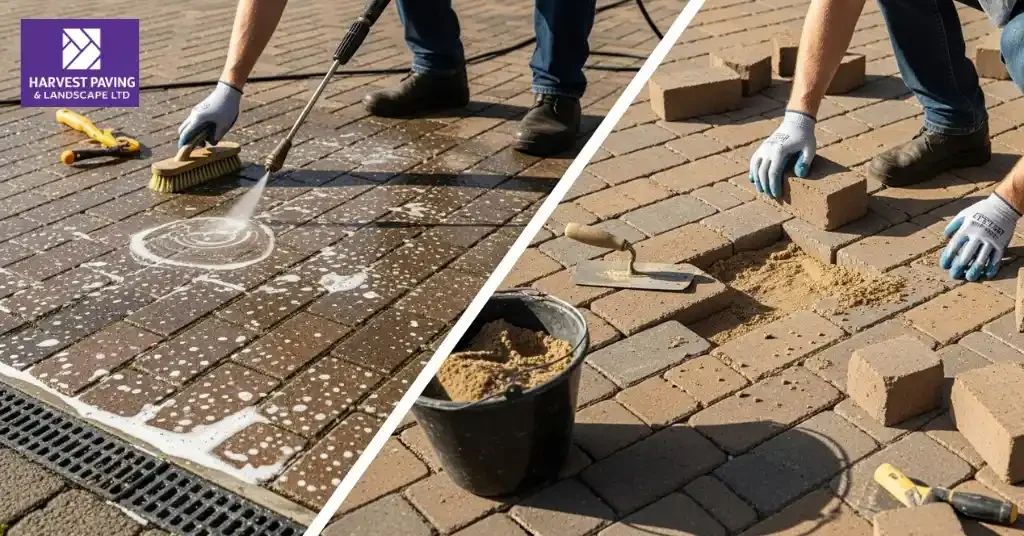
Start by removing dirt, moss, and weeds. A pressure washer works well, or use a stiff brush for smaller areas. For stubborn stains, a gentle block paving cleaner will help. A clean surface is essential for the sealer to work properly.
2. Repair and Replace
Look for any broken or loose blocks and replace them before sealing. Fill the gaps with joint sand to create an even surface. This gives you a smooth and long-lasting finish.
3. Dry the Paving
Make sure the paving is completely dry. Any moisture or rain can affect the sealer. Wait at least 24 hours after washing before applying.
4. Apply the Sealer
Pour the sealer into a bucket. Use a brush or roller for smaller areas, and a garden sprayer for larger surfaces. Apply a thin, even layer to cover all the blocks.
5. Let it Dry
Drying time varies depending on the product, usually between 24 and 48 hours. Avoid walking or driving on the surface during this time.
6. Apply a Second Coat
For stronger protection and enhanced colour, apply a second coat. This gives your paving extra durability and a more polished look.
Tips for the Best Clean and Seal Block Paving
Follow these top tips to clean and seal your block paving efficiently, keeping it strong, stable, and looking its best.
- Always read and follow the manufacturer’s instructions to get the best results.
- Choose dry weather for sealing so the sealer sets properly.
- Wear gloves and old clothes to protect your skin and clothes from spills.
- Test the sealer on a small, hidden area first to check how it affects the colour.
- After sealing, add jointing sand if needed to keep the blocks stable and prevent gaps.
If you prefer professional support for cleaning, sealing, or repair, check out Block Paving services to maintain your driveway or patio efficiently.
How to Seal a Block Paving Driveway
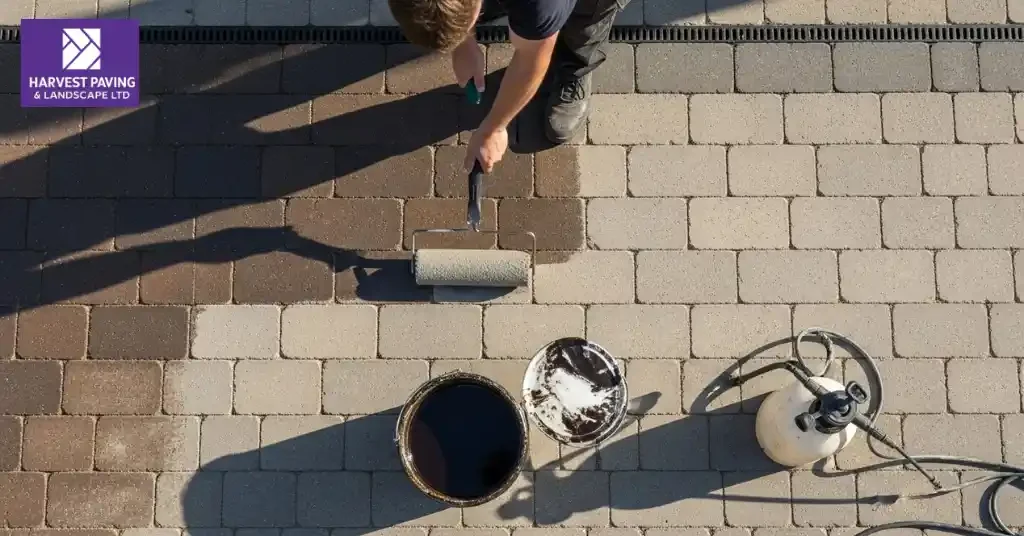
Driveways face heavy traffic, so sealing them properly is especially important. The steps are similar to sealing a patio, but keep a few extra points in mind:
- Clean any oil or tyre marks thoroughly before applying the sealer.
- Choose a high-quality driveway block paving sealant to improve durability.
- Apply more than one coat if necessary to give the surface extra protection and a polished look.
A reliable Paving Company in Colchester can take care of driveway sealing and maintenance. They help keep your surface durable, clean, and looking its best.
Key Benefits and Risks of Sealing Block Paving
Benefits:
- Protects paving from stains, dirt, and spills
- Reduces weed growth between the blocks
- Enhances natural colour for a fresher, more vibrant look
- Simplifies cleaning and general maintenance
Risks / Considerations:
- The glossy finish may become slightly slippery in wet conditions.
- Sealer needs to be reapplied every 2–3 years to maintain protection.
- Initial cost for sealer and required tools
Common Mistakes to Avoid
Even with the right products, small mistakes can affect how well your paving stays protected. Knowing what to avoid makes sealing easier and more effective.
- Avoid sealing over wet paving, as moisture can stop the sealer from working correctly.
- Don’t skip the cleaning step; dirt and moss prevent the sealer from sticking.
- Apply the sealer evenly and avoid using too much at once to prevent streaks or pooling.
- Always check the weather forecast before starting, so rain doesn’t ruin your work.
Conclusion
Sealing block paving protects your driveway or patio from long-term damage caused by dirt, stains, and weeds. Cleaning, repairing, and applying the right sealer keeps your paving solid and maintain its natural look.
Over time, regular maintenance and timely resealing help the paving stay durable while reducing the effort needed for cleaning. For additional services like landscaping or more complex paving work, consider a trusted Paving & Landscaping Company in Colchester to keep your outdoor space durable, clean, and visually appealing.
FAQs
Q1: How do I seal block paving at home?
Clean the paving thoroughly, repair any damaged blocks, and apply the right sealer in thin, even coats. Let it dry between coats for the best results.
Q2: How often should block paving be resealed?
Typically, every 2–5 years, depending on traffic, weather conditions, and the type of sealer used.
Q3: Can I seal a newly installed block paving driveway?
Wait 6–12 weeks after installation to let the paving settle and any moisture or salt deposits disappear before sealing.