
A well-planned patio adds value and comfort to your home, but poor drainage can cause major issues. Water that collects on the surface can damage paving, create slippery spots, and even harm your home’s foundation. Knowing how to install patio drainage correctly prevents these problems and protects your investment.
You will find clear steps, the right tools, and expert tips to avoid common mistakes. The article also covers patio drainage options and practical solutions for typical patio drainage problems, helping you keep your outdoor space safe and functional.
Why Patio Drainage Matters
Proper drainage for a patio keeps your outdoor space and home in good condition. It offers several benefits:
- Stop water from pooling on the patio surface.
- Reduce the risk of slips and falls.
- Protect your foundation from water damage.
- Extend the life of paving materials.
Failing to address patio drainage can lead to cracks, soil erosion, and costly repairs. A well-installed system keeps your patio safe, functional, and durable.
Common Patio Drainage Problems
Recognising typical patio drainage problems helps you pick the right system and avoid bigger issues later. Common problems include:
- Identify low spots where water collects.
- Remove mud, algae, or moss buildup.
- Repair erosion along patio edges.
- Prevent water from seeping into the home.
Identifying these problems early makes it easier to apply the correct patio drainage solutions and prevent long-term damage.
Tools and Materials You Need
Having the right tools makes installing a drainage system in a patio much easier. You will need:
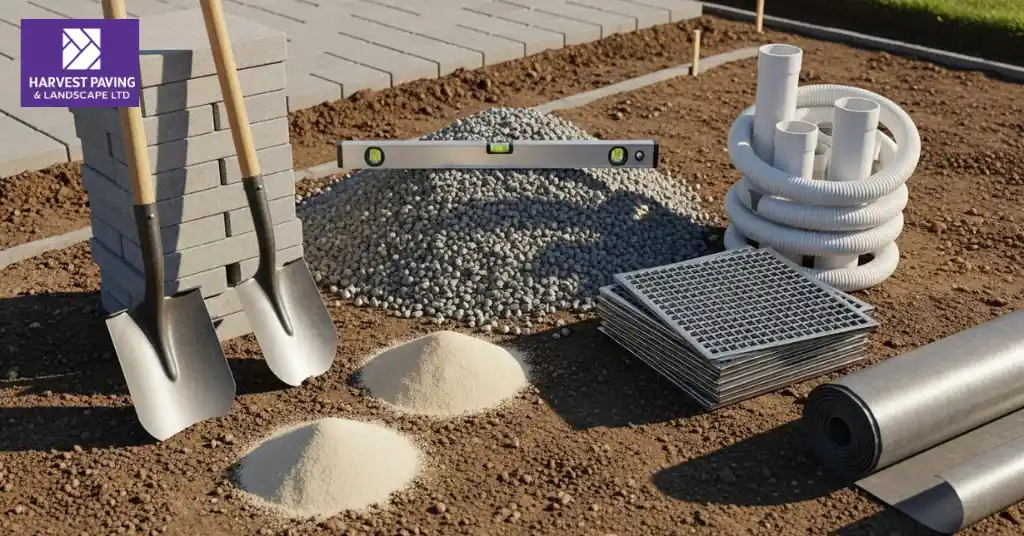
- Shovel and spade
- Spirit level
- Gravel or aggregate
- Perforated drainage pipes or channel drains
- Drainage grates
- Sand and paving materials
- Landscape fabric (optional)
Preparing all tools and materials before you start reduces errors and helps the installation go smoothly.
Best Patio Drainage Ideas
The right patio drainage solution depends on your space and water flow needs.
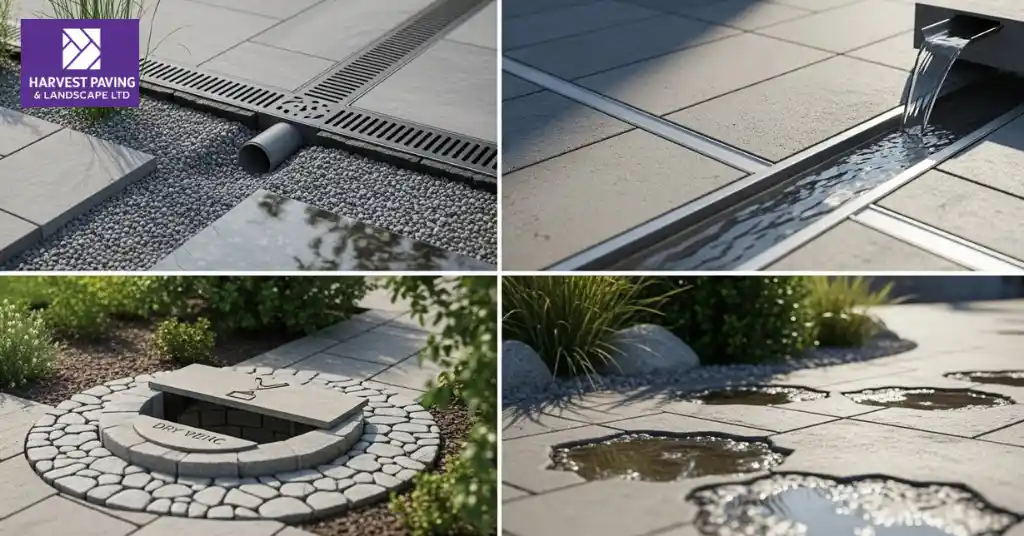
- French drains: Trenches filled with gravel and a perforated pipe, ideal for large patios with heavy water runoff.
- Channel drains: Linear drains along edges that quickly move surface water away.
- Dry wells: Underground pits that collect and store excess water, preventing pooling.
- Permeable paving: Paving that allows water to pass through, reducing surface runoff naturally.
Top Patio Drainage Mistakes to Avoid
Avoiding common errors saves time and prevents future problems with your patio drainage system.
- Ignore the slope or grade.
- Use pipes that are too small.
- Connect the drains to the wrong outlet.
- Overlook access for maintenance.
- Place drains too close to the foundation.
Catching these mistakes early reduces the risk of costly repairs.
Choosing the Right Patio Drainage System
The best patio drainage system depends on your patio’s size, design, and rainfall levels.
- Small patios usually work well with slope adjustments or channel drains.
- Large patios or wet areas need French drains or dry wells for effective water management.
- Decorative patios can use hidden grates to maintain drainage while preserving the look.
For reliable patio drainage and lasting results, trust a local paving company in Colchester and nearby areas. Their experts handle everything from planning to installation.
Maintaining Your Patio Drainage
Even a well-installed patio drainage system needs regular care to perform effectively.
- Remove leaves and debris from drains and channels.
- Check pipes and channels for blockages.
- Inspect gravel or soil for settling.
- Refill sand or gravel as needed.
- Trim nearby plants or roots that may block drains.
- Clean drainage grates to maintain water flow.
- Check for erosion around patio edges.
- Test the system after heavy rain to confirm drainage.
Keep your patio drainage in top condition by contacting a trusted Paving Contractor for expert maintenance and advice.
Conclusion
A properly installed patio drainage system keeps your outdoor space dry, safe, and comfortable. Planning the layout, selecting the right drainage solutions, and addressing low spots help water flow away efficiently.
Regular upkeep, including clearing debris and checking pipes, keeps the system working smoothly. Following best practices from the start reduces problems and keeps your patio durable and enjoyable for years. For expert advice or professional paving services, contact us to discuss your patio drainage needs and get reliable installation and maintenance support.